Based in Payson, Arizona, Pulse Drying Systems designs and manufactures advanced spray drying equipment powered by its proprietary Pulse Atomization technology. This innovative process enables the efficient drying of foods, chemicals, minerals, and nutraceuticals—preserving quality, reducing maintenance, and delivering high-performance powders with minimal thermal degradation.
Spray drying granulation is a sophisticated particle engineering process that merges drying and granulation into one continuous step. This integration enables industries such as pharmaceuticals, foods, and chemicals to produce free-flowing, uniform granules with greater efficiency. By combining the two operations, it streamlines material processing while ensuring consistency and quality in the final product.
Spray drying is a versatile and widely adopted technique for converting liquid materials into stable, dry powders. It is used extensively in the food, pharmaceutical, and chemical industries to produce products ranging from powdered dairy and nutraceuticals to active pharmaceutical ingredients and specialty chemicals. The process offers precise control over particle size, moisture content, and functional properties, making it suitable for both high-volume production and specialized formulations.
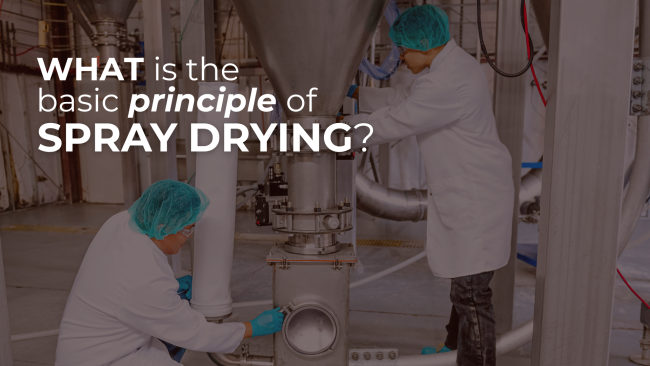
At its core, spray drying is a fast and efficient way to turn a liquid feed—whether it’s a solution, slurry, or emulsion—into a dry, stable powder. The process begins by breaking the liquid into a fine mist and then exposing those droplets to a stream of hot gas. Moisture evaporates almost instantly, leaving behind solid particles with specific, controllable characteristics.
It is a highly efficient method for transforming liquid feeds into dry powder, utilized across various industries. This process is essential for preserving sensitive materials, extending shelf life, and creating powders of specific particle sizes and morphology. It typically involves three main stages: atomization, drying, and powder recovery.
Freeze-drying is a widely used method for preserving materials such as pharmaceuticals and foods due to its ability to retain the quality of the product during the process. However, the process comes with distinct disadvantages and limitations that can impact its practicality and overall value.
Spray drying is one of the most widely used methods for converting liquid feeds such as solutions, slurries, or emulsions into dry powders. It plays a vital role in the manufacture of food ingredients, pharmaceutical compounds, and chemical products that require stability, long shelf life, and ease of handling.
Spray drying is a versatile and widely employed drying technology that converts liquid feedstocks such as solutions, slurries, or pastes into dry powders. This process involves atomizing the liquid material into fine droplets, which are then introduced into a hot drying medium, typically air. As these droplets rapidly come into contact with the hot gas, the moisture within them quickly evaporates, leading to the formation of uniform, fine powder particles.
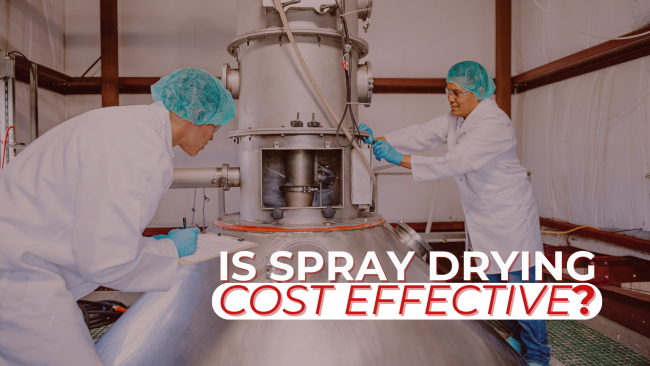
Choosing the optimal drying method for food and pharmaceutical products is essential for manufacturers seeking to balance product quality, operational efficiency, and economic viability. Two prominent drying technologies often considered are spray drying vs freeze drying (lyophilization), each having distinct processes, advantages, disadvantages, applications, and cost implications. Understanding these differences is critical for selecting the best method tailored for specific needs.
Spray drying is a widely adopted industrial process for converting liquid feeds into dry powder, offering exceptional control over particle characteristics and product quality. This technology is essential across various sectors, enabling the efficient production of finely formulated solids from solutions, slurries, or emulsions.
Industrial spray dryers represent one of the most essential technologies within modern industrial drying systems, widely used to transform liquid feeds into stable powders. This method has become indispensable in industries such as food processing, pharmaceuticals, chemicals, and ceramics, where product consistency, efficiency, and quality are non-negotiable.